
The first commandment God gave Moses, while in Egypt, two weeks before they ever left Egypt, was to establish a calendar (Ex. 12:2). He hadn't even given them the instructions for the Passover as yet. So why would God command that Israel establish a calendar before anything else related to their deliverance from Egypt? Surely, "Pack your bags; borrow from the Egyptians; prepare some food for the road; get your footwear in order and so on would have been far more appropriate concerns to be dealt with. So why a calendar? And why a lunar one?
The first thing I would say is that it would indicate that Israel was to now live and guide her affairs according to God's timetable. All of His feasts are marked and celebrated, according to specific days on His calendar. Those days do not shift or change, the way our secular ones do. Our major holidays seem to shift according to convenience, rather than hold to specific days, with a few exceptions. But God's timetable, His calendar, does not shift in that sense. Passover will always be on 15 Nisan. Rosh Hashana will always be on 1 Tishrei. This will never change until God chooses to change it.
Another way of looking at it, is to see in the issue of a calendar a representation of God's enduring faithfulness. His calendar continues. As long as sun and moon continue, day and night, God's calendar will continue to be used by God, and by those of Israel. It was seeing that God's calendar was the one used by Israel that brought me to participate in a Messianic faith community. I see keeping the Sabbath on a Saturday (7th day), keeping His appointed feasts, not as a "Jewish" thing, but a God thing, upheld and maintained through the millenia by the Jewish people. And I can tell you, there is a genuine, wonderful blessing in abiding in God's calendar, and on His timetable.
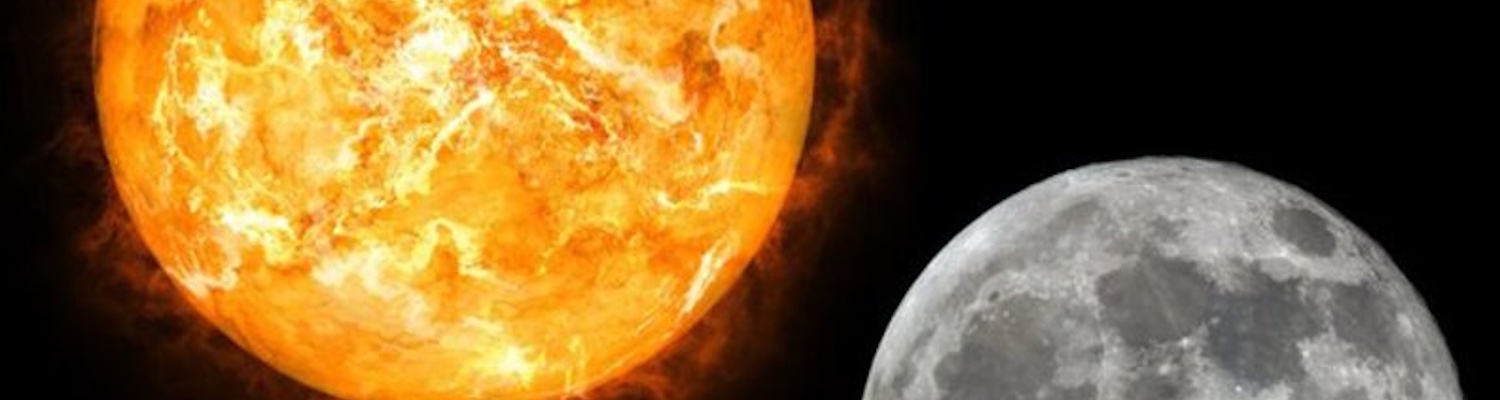
But that leaves the interesting question of why His calendar is a lunar calendar? The Sun represents God in so many ways, as source of light, of heat, of life itself (we would be blanketed in ice, in a deep freeze without the sun). Psalm 84:11 speaks of God as a sun and shield to us. Malachi 4:2 speaks of the Sun of righteousness arising with healing in His wings. Surely it would have been more representative for God's calendar and timetable to be reflected by a solar calendar, instead of a dead satellite, buried in dust, with no signs of life, able to reflect only whatever is given her? I think this is what may hold the keys to understanding the why behind this mitzvot, or commandment.
The moon represents all that we are without God, all that we became apart from Him. We are made of dust, and without God, the dust will choke out and drown out all life and knowledge of Him. We have no light of our own. We can only reflect God in this world. It is only His light and life manifest in us that causes us to become lights in this world. Without God in us, we are just as dead as the moon. The moon is perhaps the most accurate summation of what we really are before God, apart from Him. In this sense, a calendar governed by the moon, with its waxing and waning, sometimes disappearing, is entirely appropriate, and perfectly describes us.
The other reason is this: the calendar is for our benefit. God is eternal. He transcends time. He doesn't need a calender to be on time. I once heard someone speak of the story of Lazarus, who was dead in the tomb for four days before Jesus came. He said, Jesus is the only one who can be four days late, yet still be on time. Time does not govern God, but submits to Him. Therefore, the calendar is for us. So what is it supposed to do for us, other than keep a record of the passing of time and when to do certain things?
I believe it is to be a reminder of what we are. Beings of dust, caught in the gravitational pull of the earth, yet having incredible influence upon it. The moon governs the tides, and, if believed, the mental states of many. In this sense, the moon would be seen to govern the ebb and flow of water on the planet, and, if you equate 'water' with the emotional content of the human soul, then it would also govern our emotions, our 'soulishness.' Now this is not to give place to some kind of divination into moon-signs and other forms of significance concerning the moon. It is simply interesting to note that the earth impacts the moon, as much as the moon impacts the earth.
The moon waxes and wanes. It grows into fullness, giving light even in the darkest night, and yet will also wane, even seeming to disappear. Yet in those times that it disappears, it is in its closest proximity to the Sun. You could consider that when the moon is unseen, it is closest to God, to go out and then come back in again. To go out to shed and share the light it has received, and then to return once again, to receive a renewal and a refreshing. This corresponds to our 'revivals' and our times of refreshing, as well as the movement of the High Priest each year. He would come in, receive from God, then go out to bless the people. In this, it might be a good idea to look a little deeper into the significance of Rosh Chodesh observances, to move beyond the keeping of strict times and sightings, and women's 'monthlies' to understanding its purpose.
But why a lunar calendar for God's people, and a solar calendar for the rest of the world? Using a lunar calendar means having to add an extra month now and then to the lunar calendar to keep the seasons, which are controlled by the sun, in the same or similar time slot every year. If this were not so, God's seasons would be sliding all over the place, as they do in Islam, and we could be celebrating Passover, not in spring as commanded, but in harvest or the dead of winter.
I believe the reason is to show us that we are not 'in sync' with the world. We, of God, are a peculiar people. We are to be separate and kept apart, not enmeshed as it were. Sometimes we wax stropng, at others times weak, and at still others, almost disappear from mind and remembrance. I say we are supposed to be out of step with the world, consecrated unto God, His ways, His timetable, His calendar. The sun represents that which can be seen. We see clearly in the bright and brilliant light of day. While there is light from the moon, it is never full bright as the sun. We see by faith, by things perceived rather than seen, things understood rather than proved. We walk in the dimness of our knowledge of God, until one day we will see Him in all HIs fullness.
I think the use of the moon calendar is also a sign of humility. We are drab, with nothing to commend us except God. In fact, most of the females of all animal species are drab and uncolourful, parrots perhaps excepted, and is not the moon considered 'female' in its characteristics? And are not we the Bride of Christ? We walk in reflected light, not in our own. But more important than this, if we were to shine as brilliantly as the Sun, we would not be able to see anything, much less God. We would be blinded by our own brilliance. And such is the case with most of the worldlings around us. They are so blinded by their own glory, it is impossible for them to see God's.
And as for the adding in of an extra month, a leap month every third year or so, I believe that is a constant reminder that there will be a day, perhaps the 'third day' spoken so often in Scriptures, when both sun and moon will run together in time, reconciled, and in sync with one another, to the glory of God. That to me, represents the day of our Lord's return, when all will be bathed in the light of His glory, and we are all walking in full agreement with His will, and His ways, to his and our eternal glory.